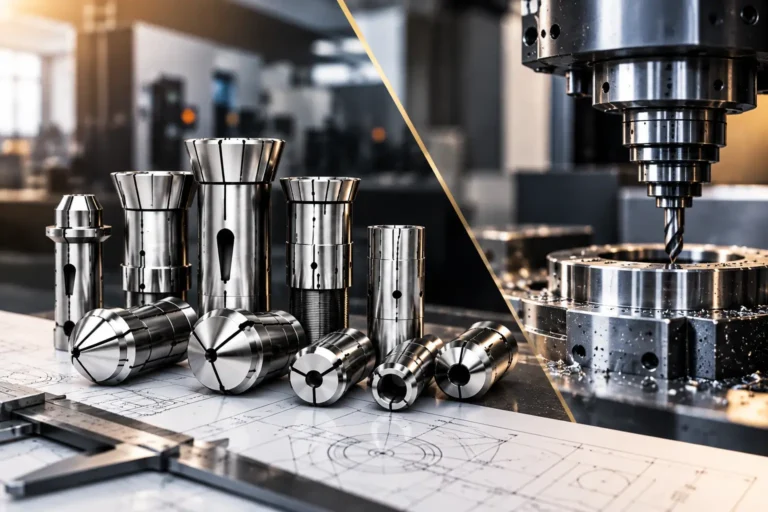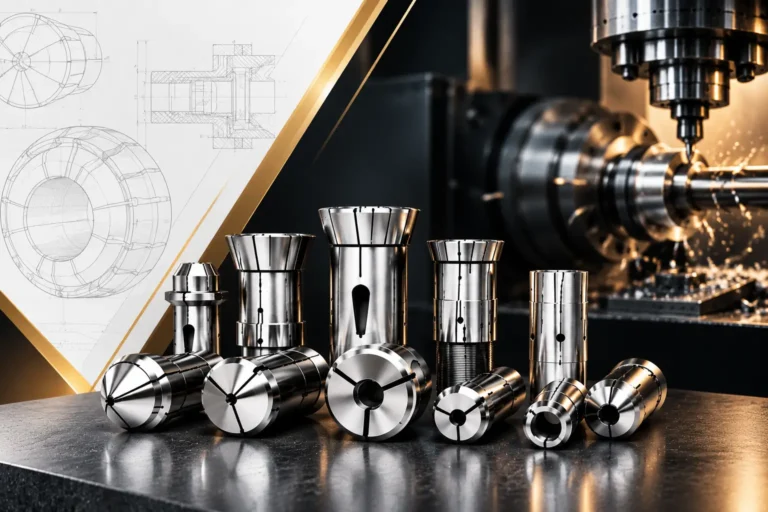

Collets are precision workholding components used to securely grip and hold a workpiece or tool during machining operations. They are widely used where accuracy, repeatability and reliable holding are important.
How Does a Collet Work?
A collet has a series of flexible slots that allow it to contract around the workpiece or tool. When the collet is tightened inside its holder, the tapered surfaces create a uniform clamping force around the component.
This helps provide:
- Secure workholding
- High gripping accuracy
- Improved repeatability
- Reduced movement during machining
- Consistent machining performance
Types of Collets
Different machining applications require different collet designs. Common types include:
Main Spindle Collets
Used for securely holding workpieces in the main spindle of a machine.
Sub Spindle Collets
Designed for workholding requirements in sub-spindle applications.
Bar Feeder Collets
Used with bar-feeding systems to provide secure and consistent material gripping.
Custom Made Collets
Developed according to specific machining requirements, dimensions and bore profiles.
Skillcrafts Industries offers Main Spindle Collets, Bar Feeder Collets, Sub Spindle Collets and Custom Made Collets as part of its precision-engineered product range.
Why Is Collet Accuracy Important?
In precision machining, even small variations in workholding can affect the final component. A properly selected and accurately manufactured collet helps maintain consistent gripping and supports reliable machining performance.
Choosing the Right Collet
The appropriate collet depends on factors such as:
- Machine and spindle configuration
- Workpiece dimensions
- Bore or gripping profile
- Required accuracy
- Machining application
- Custom technical requirements
Need the Right Collet for Your Application?
Share your machining requirement with Skillcrafts Industries and explore a precision-engineered solution.